Colorado Privacy Act
Published 17 min read
Colorado’s law reaches nonprofits as well as companies once they hold data on 100,000 Colorado consumers a year, or 25,000 with any revenue or discount from selling data; since 1 July 2024, a site that sells data or runs targeted ads must treat a Global Privacy Control signal as an opt-out.

Three documents make the Colorado law
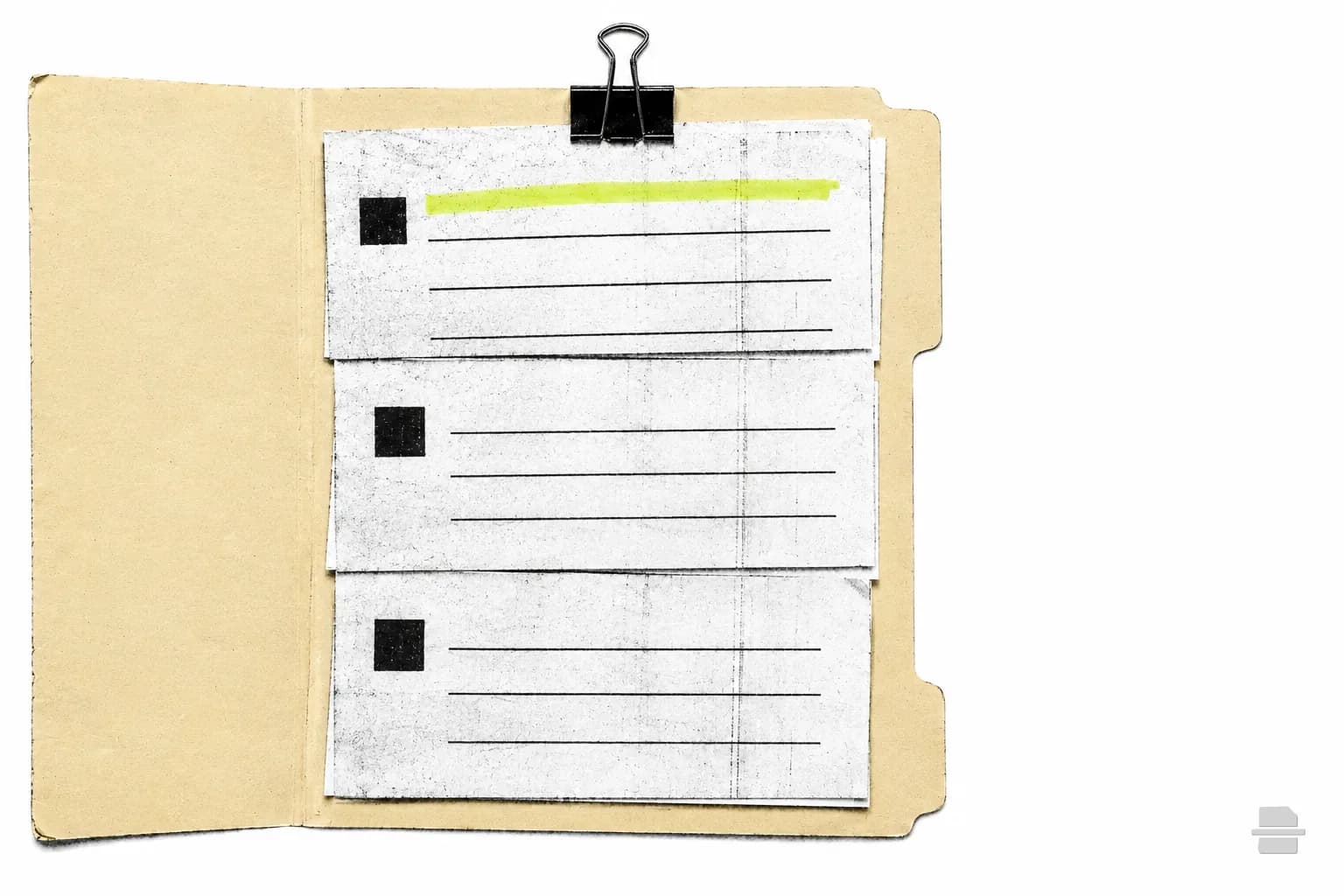
Colorado’s law is not only the statute. The Act told the Attorney General to write rules, including the technical specification for a universal opt-out mechanism, and the rules then told the Department of Law to keep a public list of the mechanisms it recognises. A privacy lead working a Colorado question usually needs all three sheets.
The Act
C.R.S. §§ 6-1-1301 to 6-1-1313 (S.B. 21-190)
The General Assembly; signed 7 July 2021. In effect 1 July 2023.
Who is covered, the rights, the controller duties, assessments, enforcement, and the order to write opt-out rules.
The Rules
The Attorney General (Department of Law); filed 15 March 2023. In effect 1 July 2023.
How requests, consent, privacy notices, assessments and profiling work in practice, and the technical spec for opt-out signals.
The List
Rule 5.07 public list of recognised mechanisms
The Department of Law, updated periodically. Opt-out signal duty from 1 July 2024.
Which universal opt-out mechanisms the Department recognises. Today the list holds one entry: Global Privacy Control.
The rules carry most of the operational detail: the wording of an opt-out link, what a privacy notice must list, the thirteen things an assessment must record, and how a site treats a browser signal. The Department has proposed amendments since, the latest filed in July 2025 to reflect two later bills (see the 2025 rulemaking), so check the current Code of Colorado Regulations before quoting a rule number to a regulator. To see which other state laws reach the same business, run the which privacy laws apply checker.
Who is inside, nonprofits included
A controller is inside when it passes two gates. First, it conducts business in Colorado or produces or delivers commercial products or services intentionally targeted to Colorado residents (§ 6-1-1304(1)(a)). Second, it meets a volume test: ≥100,000 Colorado consumers in a calendar year; or revenue/discount from selling personal data + ≥25,000 consumers. The Attorney General’s FAQ adds that the Act applies regardless of where the controller is located.
One part skips the volume test. Since 1 October 2025 the duties toward minors (§§ 6-1-1305.5, 6-1-1308.5, 6-1-1309.5, added by S.B. 24-041) apply to any controller that conducts business in Colorado or targets its residents, whatever its count.
“The law applies to entities, including nonprofits, that conduct business in Colorado or deliver commercial products or services targeted to residents of Colorado”
That clause is the first thing Colorado does differently from most of its neighbours. The exemption list in the Act as passed names no carve-out for nonprofits, and the Attorney General says so in terms. A charity, a membership association or an advocacy group with a large Colorado supporter file counts its records the same way a retailer does.
Who counts toward the 100,000
A “consumer” is a Colorado resident acting only in an individual or household context. It does not include anyone acting in a commercial or employment context, a job applicant, or a beneficiary of someone acting in an employment context (§ 6-1-1303(6)). The Attorney General’s FAQ confirms the 100,000 is Colorado residents, not people across the United States, and that job applicant data is not personal data for the threshold. A B2B software firm whose users are buyers at their desks may hold many records and still count few consumers.
The second test has no percentage. Any revenue, or any discount on goods or services, from selling personal data, combined with data on 25,000 or more consumers, is enough. Colorado defines a sale as an exchange for money “or other valuable consideration” (§ 6-1-1303(23)), so a data swap with a partner can count; disclosures to your own processors and affiliates do not.
What sits outside
| Kind | What is left out | Where |
|---|---|---|
| Whole organisations | Financial institutions and affiliates subject to the Gramm-Leach-Bliley Act; air carriers; national securities associations | § 6-1-1304(2)(l), (m), (q) |
| Health data | Protected health information held by a HIPAA covered entity or business associate, and related research and patient-safety data | § 6-1-1304(2)(a)–(h), (p) |
| Other federal regimes | Data handled under FCRA, GLBA, the Driver's Privacy Protection Act, COPPA (when compliant) and FERPA | § 6-1-1304(2)(i)–(j) |
| Work data | Data maintained for employment records purposes | § 6-1-1304(2)(k) |
| Public bodies | Utilities' customer data, and data held by the state, courts, counties, cities and state colleges for noncommercial purposes | § 6-1-1304(2)(n)–(o) |
S.B. 21-190 as enacted, posted by the Colorado Attorney General, read 22 Oct 2026. Later amendments not checked. | ||
Most of these are data-level exemptions: a clinic outside HIPAA’s reach, or a firm whose only covered data is employee files, still has to ask whether its other data passes the gates. Full text: S.B. 21-190.
Count Colorado residents in consumer roles only, per calendar year, across every system (CRM, newsletter, donor file, ad audiences). If you are near 25,000, list every place personal data leaves the business in exchange for anything of value before deciding the revenue gate does not apply.
The universal opt-out: GPC, and only GPC so far
Since 1 July 2024, a controller that sells personal data or uses it for targeted advertising must let Colorado consumers opt out through a user-selected universal opt-out mechanism that meets the Attorney General’s technical specification (§ 6-1-1306(1)(a)(IV)(B)). Rule 5.07 told the Department of Law to publish a list of recognised mechanisms. The list has one entry. In the Department’s words: “Currently, the only UOOM considered valid by The Department is GPC.”
Global Privacy Control is a signal a browser or extension sends with each request, as the HTTP header Sec-GPC: 1, and exposes to scripts as navigator.globalPrivacyControl. The Department adds that its list does not rule out other mechanisms; it is the set it will prioritise for enforcement.
“A Controller that receives an opt-out request through a Universal Opt-Out Mechanism shall treat such as a valid request to opt out of the Processing of Personal Data for purposes of Targeted Advertising, Sale of Personal Data, or both purposes, as indicated by the mechanism, for the associated browser or device, and, if known, for the Consumer.”
What a site does when the signal arrives
- 01Listen for itA controller must be able to recognise every mechanism on the Department's list. For a signal, that means reading it on each request. Rule 5.08(A)(3)
- 02Treat it as an opt-outStop targeted advertising, sale, or both, as the signal indicates, for that browser or device and, if you know who it is, for that person. Rule 5.08(A)(1)
- 03Keep it in forceThe opt-out stands until the person consents again. A later visit without the signal is not consent to opt back in. Rules 5.08(A)(2), 5.09(B)
- 04Ask for nothing extraNo login or authentication as a condition. You may check Colorado residency, but you need not, and you may collect only what that strictly requires. Rules 5.05(B), 5.08(D), 5.08(F)
- 05Say how you handle itThe privacy notice must explain how opt-out requests sent by a universal mechanism are processed. Rule 6.03(A)(4)(e)
- 06Watch the listWhen the Department adds a new mechanism, controllers get six months to recognise it. Rule 5.07(F)
An opt-out by signal lasts until the person consents again; the signal going quiet is not consent. Rule 5.08(E) lets a controller show the result on the page, for example “Opt-Out Preference Signal Honored”. In Colorado that display is optional.
Default-on browsers
The Act forbids a mechanism that is a default setting (§ 6-1-1313(2)(c)), and Rule 5.04 draws the line. A signal switched on by default in a browser that came pre-installed with the device or operating system does not show the person’s choice. A tool the person installed themselves, marketed as one that sends opt-out signals, does, even if the signal is on by default. The GPC site lists browsers with native support, some with the signal on by default; under Rule 5.04(B), one the person downloaded and installed counts as their choice.
A universal mechanism carries the opt-outs from targeted advertising and from sale. Controllers are not obliged to treat it as a request for anything else (Rule 5.03(B)), so the opt-out from profiling behind significant decisions still needs its own method.
Test it from the visitor’s side with the Global Privacy Control checker, which reads the signal in your own browser. Most sites wire the response through their consent tool; the consent management platform comparison shows which ones say they honour GPC.
Five signal situations, read against the rules
The rules answer most of the questions a product team asks once GPC handling reaches the backlog. Pick the situation closest to yours.
Signal desk. Pick a situation to read what Colorado’s rules ask of the site. Nothing leaves your browser.
A first-time visitor's browser sends Sec-GPC: 1. Your site runs ad pixels that build retargeting audiences.
Opt this browser out of targeted advertising and sale now
- Suppress the retargeting pixels and any data sale for this browser or device.
- Do not ask them to log in or create an account first.
- If your notice says you display the result, show it; in Colorado that is optional.
Rules 5.08(A)(1), 5.08(D), 5.08(E). 4 CCR 904-3 as filed 15 March 2023. Not legal advice.
Colorado's signal rule beside California's
A firm already honouring GPC for California has most of the plumbing. The differences sit in what the signal covers and what the page must show.
| Question | Colorado | California |
|---|---|---|
| Is GPC named? | Yes. The Department's list holds one mechanism: GPC. | The regulation does not name it; the Attorney General says a user-enabled GPC must be honoured. |
| What the signal opts out of | Targeted advertising, sale, or both, as the mechanism indicates. | Sale and sharing. |
| Show the result on the site | Optional ("may display"). | Required: the business must display whether it processed the signal. |
| Signal on by default | Not valid from a pre-installed tool; valid from a privacy tool the person installed. | Not covered on this page. |
| Where the rule lives | C.R.S. § 6-1-1306(1)(a)(IV); 4 CCR 904-3, Part 5. | Cal. Code Regs. tit. 11, § 7025. |
Colorado AG opt-out page and CPA rules; California AG CCPA page and CPPA regulations, read 22 Oct 2026. | ||
Build one signal handler for both states: suppress sale, sharing and targeted advertising when GPC is on, tie the opt-out to the account when the visitor is signed in, and show the status line everywhere, since California needs it and Colorado allows it. The guide to the Do Not Sell or Share link covers the California side of the same footer.
Colorado on one sheet
- Full name
- Colorado Privacy Act (CPA), C.R.S. 6-1-1301 ff. (S.B. 21-190)
- Rules
- 4 CCR 904-3, written by the Attorney General
- In force
- 1 Jul 2023; the opt-out signal duty from 1 Jul 2024
- Who it binds
- ≥100,000 Colorado consumers in a calendar year; or revenue/discount from selling personal data + ≥25,000 consumers; nonprofits included; from 1 Oct 2025 the minors' duties bind any controller doing business there, with no volume test
- Who it protects
- Colorado residents acting in an individual or household context
- Rights
- Opt out (targeted ads, sale, significant profiling), access, correct, delete, portability
- Request clock
- 45 days + 45; appeals 45 days + 60
- Opt-out signal
- Yes, 1 Jul 2024 (GPC is the only recognised UOOM)
- Assessments
- Kept 3 years after processing ends; to the AG within 30 days of a request
- Enforced by
- Attorney General and district attorneys; no private right of action
- Cure period
- 60 days, ended 1 Jan 2025
Colorado Attorney General pages, S.B. 21-190 and 4 CCR 904-3, read 22 Oct 2026. Information, not legal advice.
Rights, and the two clocks
Colorado gives consumers five rights over personal data (§ 6-1-1306(1)):
- Opt out
- Of targeted advertising, sale, and profiling in furtherance of decisions with legal or similarly significant effects
- Access
- Confirm whether you process their data, and see it
- Correct
- Fix inaccuracies, given the data's nature and the purposes of processing
- Delete
- Personal data concerning them
- Portability
- A portable, readily usable copy, no more than two times per calendar year
Two clocks, two different extensions
The request clock is the familiar 45 days + 45. The appeal clock is built differently from Virginia’s flat 60 days: 45 days, plus up to 60 more. Both extensions must be announced inside the first 45 days.
A request
45 days + 45 = 90 at most
Answer within 45 days; extend once by 45 where reasonably necessary, telling the person within the first 45 days, with reasons. § 6-1-1306(2)(a)
An appeal
45 days + 60 = 105 at most
Answer within 45 days with a written explanation; extend by 60 where reasonably necessary, again telling the person within 45 days. § 6-1-1306(3)(b)
Black: the base period. Manila: the extension. Scale: 105 days.
A refusal also has a 45-day limit: give the reasons and the instructions for appealing. After an appeal, tell the person they can contact the Attorney General if they are unhappy with the result. The first request in any twelve months is free; for a second or later one the Attorney General’s FAQ allows 25 cents per page or no more than the actual cost. Work out the dates for a live request with the DSAR deadline calculator.
How people must be able to ask
- No one may be made to create an account to use a right (§ 6-1-1308(1)(c)(I)).
- Methods follow how people already deal with you: an online-only business that deals directly with consumers needs only an email address; a business with stores should consider offline routes too (Attorney General’s FAQ).
- An opt-out link must go straight to the method, with text such as “Your Privacy Choices” or “Your Colorado Privacy Choices” (Rule 4.03(B)(3)).
- When someone asks for several things at once, complete the opt-out first if it is quicker (Rule 4.03(A)(1)(b)).
Keep a record of every rights request for at least 24 months: the date, the type, the date and nature of your answer, any reason for refusing, and any appeal and how it ended (Rule 6.11(A)).
Put the appeal clock in your request tracker as its own deadline. A team that copies Virginia’s 60-day appeal answer into its Colorado process misses the 45-day point at which the extension notice is due.
Where Colorado asks for consent
Colorado is an opt-out law for most processing, with three places where you need consent first. Consent means a clear, affirmative act showing freely given, specific, informed and unambiguous agreement (§ 6-1-1303(5)).
Sensitive data
Before processing it at all. For a known child, the consent comes from a parent or lawful guardian.
§ 6-1-1308(7)
A new purpose
Before using data for a purpose not reasonably necessary to, or compatible with, the purposes you specified.
§ 6-1-1308(4)
Back in after an opt-out
Before selling, or using for targeted ads, the data of someone who opted out, including by signal.
§ 6-1-1306(1)(a)(IV)(C)
Sensitive data, as enacted
- Racial or ethnic origin, religious beliefs
- A mental or physical health condition or diagnosis
- Sex life or sexual orientation
- Citizenship or citizenship status
- Genetic or biometric data processed to uniquely identify a person
- Personal data from a known child (under 13)
Never consent
- Accepting broad terms of use that bundle data processing with unrelated text
- Hovering over, muting, pausing or closing a piece of content
- Agreement obtained through dark patterns: an interface designed or manipulated to subvert or impair choice
The list has grown since 2021. The Attorney General’s rulemaking page says Senate Bill 25-276 adds precise geolocation data as sensitive data, and Senate Bill 24-041 adds protections for minors’ online data, in effect since 1 October 2025. Check the current statute for 25-276’s start date before relying on the enacted list above.
Consent goes stale
If someone has not interacted with you in the prior 24 months, refresh consent before you keep processing their sensitive data (Rule 7.08). You are spared the refresh where people can update their choices at any time through a settings page they control. Asking again after an opt-out has its own limit: no interface-dominating cookie banners, cookie walls, high-frequency requests, pop-ups or other interstitials (Rule 7.05(B)). Loyalty schemes are not a back door either: the Attorney General’s FAQ says using loyalty-program data for targeted advertising is a secondary use that needs consent.
Give sensitive-data consents a timestamp and a last-interaction date, and run a monthly job that flags anyone past 24 months. The consent platform comparison shows which tools keep an exportable consent record.
What the privacy notice must say
The Act lists five things a notice includes (§ 6-1-1308(1)(a)) and asks for a clear disclosure of any sale or targeted advertising and how to opt out of it (§ 6-1-1308(1)(b)). Rule 6.03 turns that into eight items, with a level of detail the statute does not spell out. Categories must be specific enough to mean something: the rule’s own examples include “Information from Cookies” and “payment information” for data, and “analytics companies” or “data brokers” for recipients.
The Rule 6.03 notice, item by item
- 01What you do with data, online and offlineCategories processed (saying whether a child's or other sensitive data is among them), each purpose, whether data is sold or used for targeted ads or significant profiling, categories sold or shared, and categories of third parties. Rule 6.03(A)(1)
- 02Profiling disclosuresOnly if you profile in furtherance of decisions with legal or similarly significant effects. Rule 6.03(A)(2)
- 03The list of rightsEvery data right available to the consumer. Rule 6.03(A)(3)
- 04How to use themInstructions for each method, how an authorized agent opts out, the opt-out method or link, how you authenticate, and how universal opt-out requests are processed. Rule 6.03(A)(4)
- 05Sensitive inferences deleted in 24 hoursOnly if you rely on that exception: which inferences, and the deletion timeline. Rule 6.03(A)(5)
- 06Your contact informationHow to reach the controller. Rule 6.03(A)(6)
- 07How to appealInstructions for appealing your answer to a request. Rule 6.03(A)(7)
- 08Date last updatedOn the notice itself. Rule 6.03(A)(8)
Item 4 carries the line a notice written for another state may lack: since 1 July 2024 it must explain how universal opt-out requests are processed. The opt-out method must also sit outside the notice, in a clear, conspicuous and readily accessible place (§ 6-1-1306(1)(a)(III)).
Check your notice against these eight items with the privacy policy checklist, then add one plain paragraph on GPC: that you read it, what it switches off, and that it applies to the browser and, when you know who the person is, to their account.
Data protection assessments under the rules
The Act requires a documented assessment before any processing that presents a heightened risk of harm, and names four kinds (§ 6-1-1309(2)):
- Targeted advertising
- Profiling with a reasonably foreseeable risk of unfair or deceptive treatment, unlawful disparate impact, financial or physical injury, an offensive intrusion on privacy, or other substantial injury
- Selling personal data
- Processing sensitive data
The statute asks you to weigh benefits against risks as reduced by safeguards (§ 6-1-1309(3)). Rule 8.04 then sets a minimum of thirteen items, which goes well past that one-sentence test:
- 01A short summary of the processing
- 02Categories of data, flagging sensitive and known-child data
- 03Context: your relationship with the people and their reasonable expectations
- 04Operational detail: sources, technology, processors, recipients, retention, sharing
- 05Core purposes and the benefits to you, the consumer, other stakeholders and the public
- 06The sources and nature of the risks to consumers' rights
- 07Safeguards: de-identification, security, consent measures, access to rights
- 08Why the benefits outweigh the risks once safeguards apply
- 09For profiling, the extra Rule 9.06 content
- 10For the 24-hour sensitive-inference exception, how deletion is ensured
- 11Internal and external contributors
- 12Any audit: who, which reviewers, what process
- 13Review and approval dates, with names, positions and signatures
When, how often, how long
- Write it before the processing starts (Rule 8.05(A)); it is required for activities created or generated after 1 July 2023, not retroactively.
- Review it as often as the risk warrants; an assessment covering profiling for significant decisions is reviewed at least once a year, with a fresh fairness and disparate-impact check (Rule 8.05(B)–(C)).
- A material change (new purpose, new data source, new processor, a changed algorithm) makes it a new activity that needs an updated assessment (Rule 8.05(D)).
- Keep every version for as long as the processing continues and at least three years after it ends, in an electronic, transferable form (Rule 8.05(E)).
- One assessment can cover a comparable set of operations with similar activities (§ 6-1-1309(5)).
The Attorney General can ask for an assessment, and you have 30 days to produce it (Rule 8.06(A)). It stays confidential and outside the Colorado Open Records Act, and handing it over does not waive privilege (§ 6-1-1309(4)).
Start from the privacy impact assessment template and add the Colorado-only fields: the named reviewers and signatures, the audit details, and the review dates. Keep it where you could produce it inside 30 days.
Enforcement, and what changed since 2023
Enforcement belongs to the Attorney General and district attorneys, who share exclusive authority (§ 6-1-1311(1)(a)). There is no private right of action (§ 6-1-1310(1)). For their enforcement, a violation is a deceptive trade practice under the Colorado Consumer Protection Act (§ 6-1-1311(1)(c)), which is where the penalties come from. The penalty answer in the Attorney General’s FAQ was blank when read, so this page does not state an amount. The Act also preempts local privacy ordinances (§ 6-1-1312).
The cure period is gone: 60 days, ended 1 Jan 2025. Before then, a regulator had to send a notice of violation and wait 60 days where a cure was possible. Since then, a regulator can sue without that step.
The Colorado file, by date
- S.B. 21-190 signed, creating the Colorado Privacy Act
- The Attorney General files the CPA Rules (4 CCR 904-3)
- The Act and the Rules take effect
- Enforcement launched; the Department starts mailing letters to businesses about their obligations
- S.B. 24-041 signed: data protections for minors' online activity
- Universal opt-out duty starts; GPC is the recognised mechanism
- The mandatory 60-day cure notice ends
- S.B. 25-276 signed: precise geolocation becomes sensitive data
- Proposed rule amendments filed for the two bills; comments closed 10 Sep 2025
- S.B. 24-041 takes effect: the minors' duties reach any controller doing business in Colorado, with no volume test
The 2025 amendments were still proposed on the Department’s rulemaking page when read; watch it for the adopted text. For how Colorado sits among the other state laws, see the US state privacy laws table.
Questions
Does the Colorado Privacy Act apply to nonprofits?
Yes. The Attorney General’s FAQ says the law applies to entities “including nonprofits”, and the exemption list in § 6-1-1304(2) as enacted has no nonprofit carve-out. A nonprofit is inside when it passes the same business and volume tests as a company.
Is the 100,000 counted across the US or only in Colorado?
Only Colorado residents acting in an individual or household context (§ 6-1-1303(6)). The Attorney General’s FAQ says so directly.
Do employee and job applicant records count?
No. People acting in an employment context and job applicants are not consumers, and data maintained for employment records purposes is exempt (§ 6-1-1304(2)(k)).
We do not sell data or run targeted ads. Do we still deal with GPC?
The signal duty in § 6-1-1306(1)(a)(IV) is written for controllers that do one or the other. Rule 6.03(A)(4)(e) still asks every covered privacy notice to explain how universal opt-out requests are processed, so a short statement belongs in yours.
Does GPC opt someone out of profiling too?
No. A universal mechanism carries the opt-outs from targeted advertising and sale; controllers are not obliged to honour it for other purposes (Rule 5.03(B)). Offer the profiling opt-out through your own method.
Must we confirm a GPC visitor lives in Colorado?
No. You may check residency but are not obliged to (Rule 5.08(F)), and you may not make logging in a condition of honouring the signal (Rule 5.08(D)).
Can a consumer sue us under the CPA?
No. The Act creates no private right of action (§ 6-1-1310(1)). The Attorney General and district attorneys enforce it.
Do we still get 60 days to fix a problem?
Not as of right. The mandatory notice and 60-day cure ended on 1 January 2025.
How long do we keep data protection assessments?
For as long as the processing continues and at least three years after it ends, including earlier versions (Rule 8.05(E)).