Notice at collection template

Write the short notice California requires where you collect personal information: the categories you take (sensitive ones included), why, whether each is sold or shared, how long you keep it, and the links to your opt-out page and privacy policy. Pick where you collect and it shapes the notice for a web form, an app, a printed form or a phone call; switch it to the GDPR first layer if your customers are in the EU. Copy it as text or HTML, or print it. It runs in your browser.

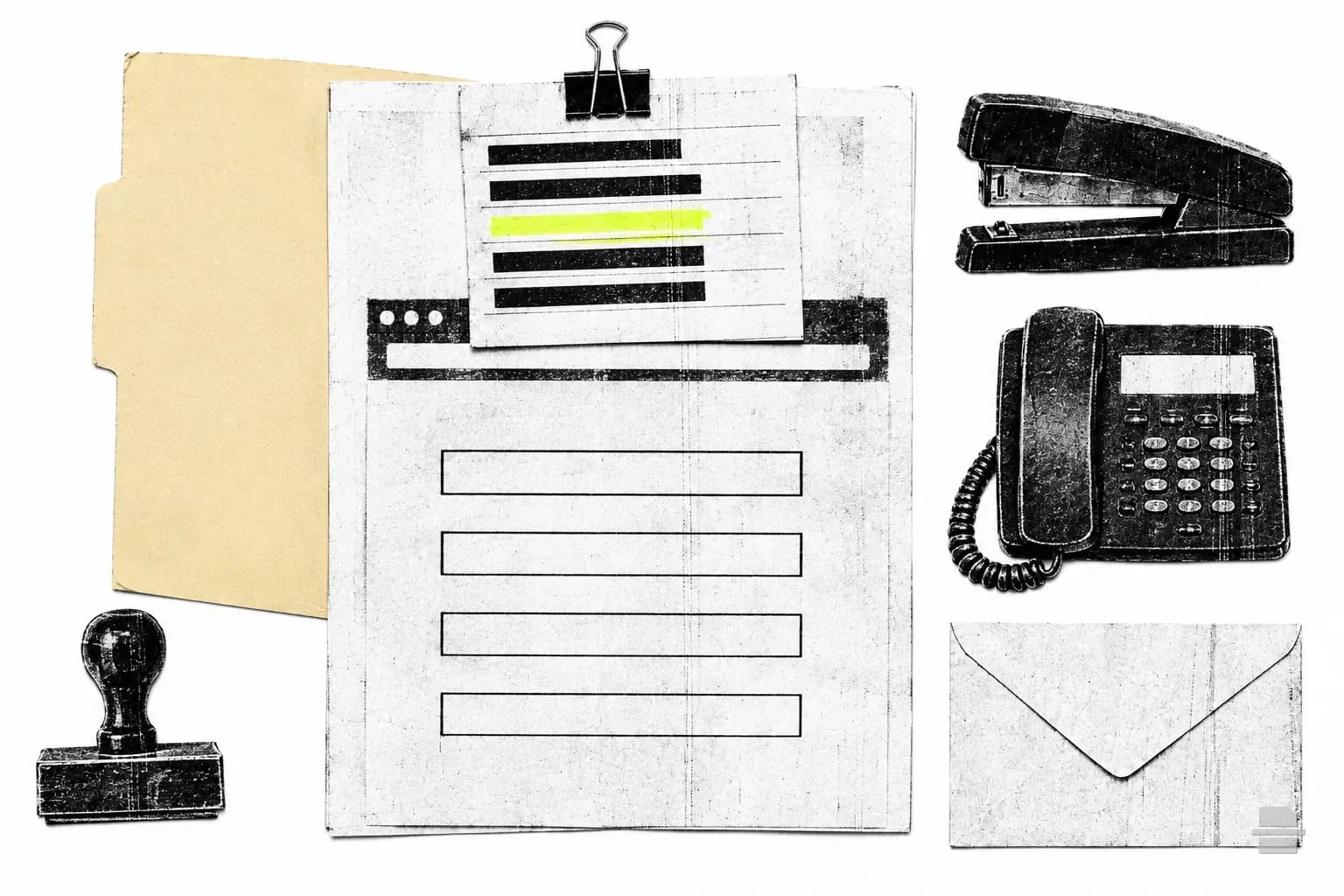
Photocopy-style paste-up of a printed web form with a small ruled notice slip stapled above it

The rule behind each part

When
at or before the point of collection, § 1798.100(a)
What it carries
categories incl. sensitive, purposes, sold or shared, retention, opt-out link, policy link, regs § 7012(e)
No notice
no collection, regs § 7012(d)
Online shortcut
a link straight to the policy section holding these parts, never the top of the policy, § 7012(f)
How it reads
plain language, readable on small screens, in the languages you trade in, accessible, § 7003(a)–(b)
Something new
a new category or an incompatible purpose needs a new notice, regs § 7002(f)
Third parties collecting
they give a notice too, or join yours, regs § 7012(g)(1)
“Shared”
made available for cross-context behavioral advertising, money or not, § 1798.140(ah)(1)
GDPR
at the time the data is obtained, the Art. 13(1)–(2) items

CCPA statute and regulations (effective 1 Jan 2026) and GDPR, read 22 Oct 2026.

What a notice at collection is, and what this builds

California’s privacy law asks a business to tell people four things at or before the moment it collects their personal information: which categories it collects, why, whether it sells or shares them, and how long it keeps each one. The regulations call that the Notice at Collection and add two links to it: the opt-out page when anything is sold or shared, and the privacy policy. It is short on purpose. The regulations say it exists so that a person can decide, before handing anything over, whether to go ahead or to opt out.

This builder writes it from the statute’s own list of categories, ties each category to its purposes in a grid, and reads the six required parts back to you. Switch the place of collection and the notice changes shape: a slip beside a web form, a printed version with the web addresses written out, or a script to read out on the phone. Switch to GDPR and it writes the first layer of an Art. 13 notice instead. The notice is a summary of your privacy policy, so the two must say the same thing; for who the law covers at all, start with what the CCPA is.

What it does not do

It does not read your forms or your site. You type what you collect; it stays in this tab. Nothing is sent to us or stored, and closing the tab clears it. Information, not legal advice.

How to use this notice at collection template

  1. One notice per point of collection. A quote form, a checkout, an app sign-up and a shop counter collect different things. Build a notice for each, or one that honestly covers all of them.
  2. List what the form actually takes. Open the form and count every field, plus what your tags read in the background (IP address, cookie IDs). A data map makes this a copy job rather than a guess.
  3. Write the categories in your customer’s words. The category name is the statute’s; the line beside it is yours: “name, email and phone number”, not “identifiers”.
  4. Use the retention periods you already decided. If you have none, set them first with the data retention policy template; the notice and the schedule must match.
  5. Be straight about ad pixels. Letting an ad network read visitors’ data for targeted ads on other sites is “sharing” whether or not money changes hands. The “Do Not Sell or Share” link guide covers the page it points to.
  6. Clear step 4, then copy. Copy the HTML into the page beside the form, or print it for the counter. Re-run it when the form gains a field.

Where the notice goes, place by place

The regulations give examples rather than one fixed spot. The test underneath all of them is that people meet the notice where they hand the information over, before they do.

Where a Notice at Collection goes, by place of collection
PlaceWhere the notice goesThe links becomeRule
A web formA conspicuous link to the notice close to the fields, or close to the submit button.links§ 7012(c)(2)
Anywhere on the websiteA conspicuous link on the site's introductory page and on every page that collects personal information.links§ 7012(c)(1)
A mobile appA link on the app's download page and inside the app, for example in its settings menu.links§ 7012(c)(3)
On paper or in a shopOn the printed form, as a paper copy, or a prominent sign saying where the notice is online.the web address, written out or read out§ 7012(c)(4)
By phone or in personThe notice may be given orally.the web address, written out or read out§ 7012(c)(5)
CCPA regulations §§ 7012(c), (e)(5)–(6), read 22 Oct 2026.

Worked example: the solar installer's quote form

The pre-filled firm takes quote requests on its website. The form asks for a name, address, email, phone number, the monthly electricity bill and roof photos; an ad pixel on the page reads the IP address and cookie IDs; and a financing option asks for a social security number for the credit check. That is 5 categories, 5 purposes, and this table in the notice:

The example firm's notice at collection, category by category
CategoryWhat it coversUsed forSold or sharedKept for
IdentifiersName, postal address, email, phone number, and the IP address and cookie IDs our ad pixel reads1, 2, 4, 5shared3 years after your last quote or job
Commercial informationYour monthly electricity bill, the system you ask about and the quotes we send1, 2, 5neither7 years after your contract ends, or 3 years after a quote you did not take
Internet or network activityPages you view and ads you click on our site, recorded by an advertising pixel4shared13 months
Audio, electronic or visual informationPhotos of your roof and electrical panel that you upload1, 2neitherWith your job file until your warranty ends
Government ID numbers (sensitive)Social security number, only if you apply for financing3neither2 years after the credit decision
The periods are the example firm's own decisions, not legal figures. Purpose numbers refer to the notice's numbered list.

What the builder reads back: 6 of 6 required parts in place. 2 of the 5 categories are shared, because the pixel lets an ad network use the data for ads on other sites, so the notice carries the opt-out link. Sharing also means the firm has to treat an opt-out preference signal such as Global Privacy Control as an opt-out request; the GPC checker shows what a browser sends.

The social security number is sensitive personal information, used only for the credit check the customer asked for. That is the first use regs § 7027(m) lists, so the firm needs no Notice of Right to Limit. Read by phone instead, the same notice runs to about 250 words: roughly 1 min 40 s at an assumed 150 words a minute, which is why a call script names the categories in plain words and sends the detail to the web address.

Where a notice at collection falls short

  • A link to the top of the privacy policy. Online, a link can stand in for the notice only if it lands on the section that holds the parts. Sending people to the start, so they scroll for it, does not meet the standard.

    regs § 7012(f)

  • Category names and nothing else. Each category has to be written so a reader understands what is collected. “Commercial information” means little until it says “your electricity bill and the quotes we send”.

    regs § 7012(e)(1)

  • “As long as necessary”. The notice gives how long each category is kept, or the criteria that set it where a period is not possible.

    regs § 7012(e)(4)

  • A new field, the old notice. Collecting a new category, or using data for a purpose incompatible with the one disclosed, needs a new notice first.

    regs § 7002(f)

  • The ad network left out. A third party that controls collection on your site gives its own notice, or the two of you give one that covers both.

    regs § 7012(g)(1)

  • After the submit button. If the notice is not given at or before collection, the business may not collect.

    regs § 7012(d)

Jurisdiction notes

CAEUVA

California. The notice is set by Civ. Code § 1798.100(a) and spelled out in regs § 7012. It covers people in California a business collects from, at each point of collection. The privacy policy is the long version and must agree with it.

EU and GDPR. Art. 13 asks for its items “at the time when personal data are obtained”. Where the data comes from someone else, Art. 14 gives a reasonable period, at the latest one month. The Article 29 Working Party’s transparency guidelines (WP260 rev.01, ¶¶ 35–36) support a layered notice whose first layer names the controller, the purposes and the rights, and links to the rest; that is the variant this builder writes. For the two laws side by side, see GDPR vs CCPA.

Other US states. Virginia’s law asks for a privacy notice with five items: categories processed, purposes, how to use the rights and appeal, the categories shared with third parties, and the categories of third parties (Va. Code § 59.1-578(C)). Its text does not set out a California-style notice at the point of collection. The Virginia guide and the state law table cover the rest.

Check this

Read the notice beside your privacy policy before you publish it: a period or a “we do not sell” line that differs between the two is the first thing a reviewer finds.

Questions

Is a notice at collection the same as a privacy policy?
No. The policy is the full account of your practices; the notice is the short version given where data is collected. Online, a link that lands directly on the policy section holding the required parts can serve as the notice (regs § 7012(f)).
Do I need one if I never sell or share data?
If you collect personal information from people in California and the CCPA covers you, yes. Only the opt-out link drops out (regs § 7012(e)(5)); the categories, purposes, the “not sold or shared” answer, retention and the policy link stay.
Can I give the notice by phone?
Yes. The regulations allow it orally when you collect over the phone or in person (§ 7012(c)(5)). Pick “By phone or in person” in step 1 for a script with the web addresses written to be read out.
When do I have to update it?
Before you collect a new category or use data for a purpose incompatible with what you disclosed (regs § 7002(f)). Separately, the privacy policy has to be updated at least once every 12 months (Civ. Code § 1798.130(a)(5)).
Can one notice cover both CCPA and GDPR?
The contents differ: GDPR wants the controller's identity, a legal basis for each purpose and the rights; California wants the sold-or-shared answer and its two links. A combined notice has to carry both sets. Build each here and compare.

Related